
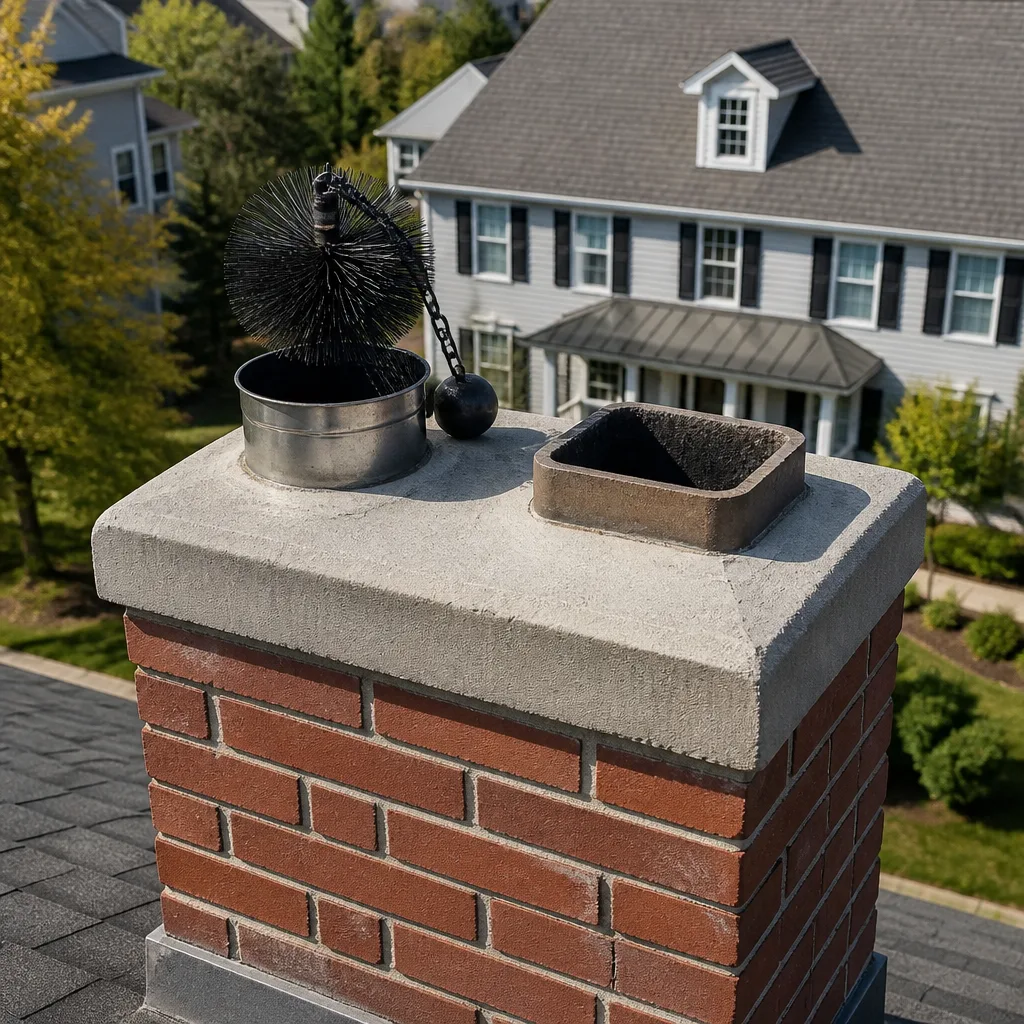
 Sweep & inspection
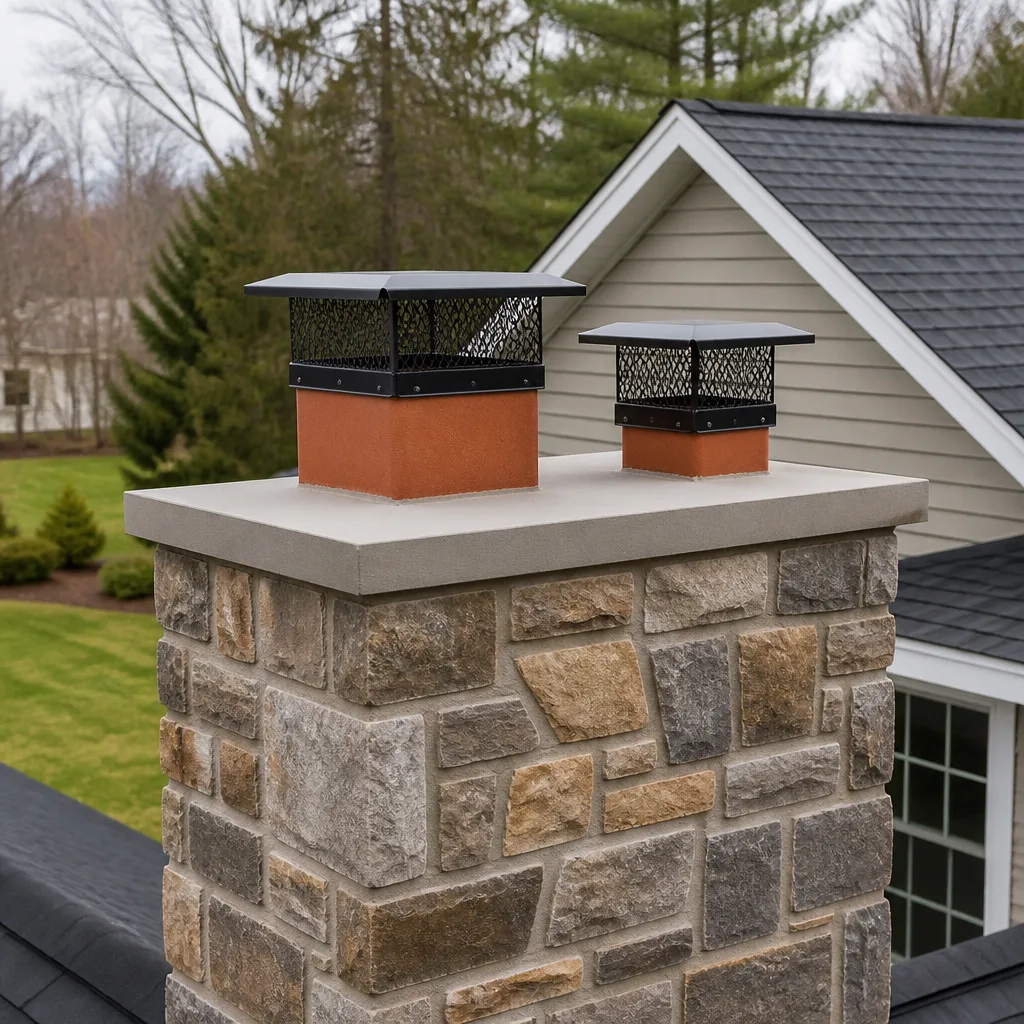 Caps & crowns
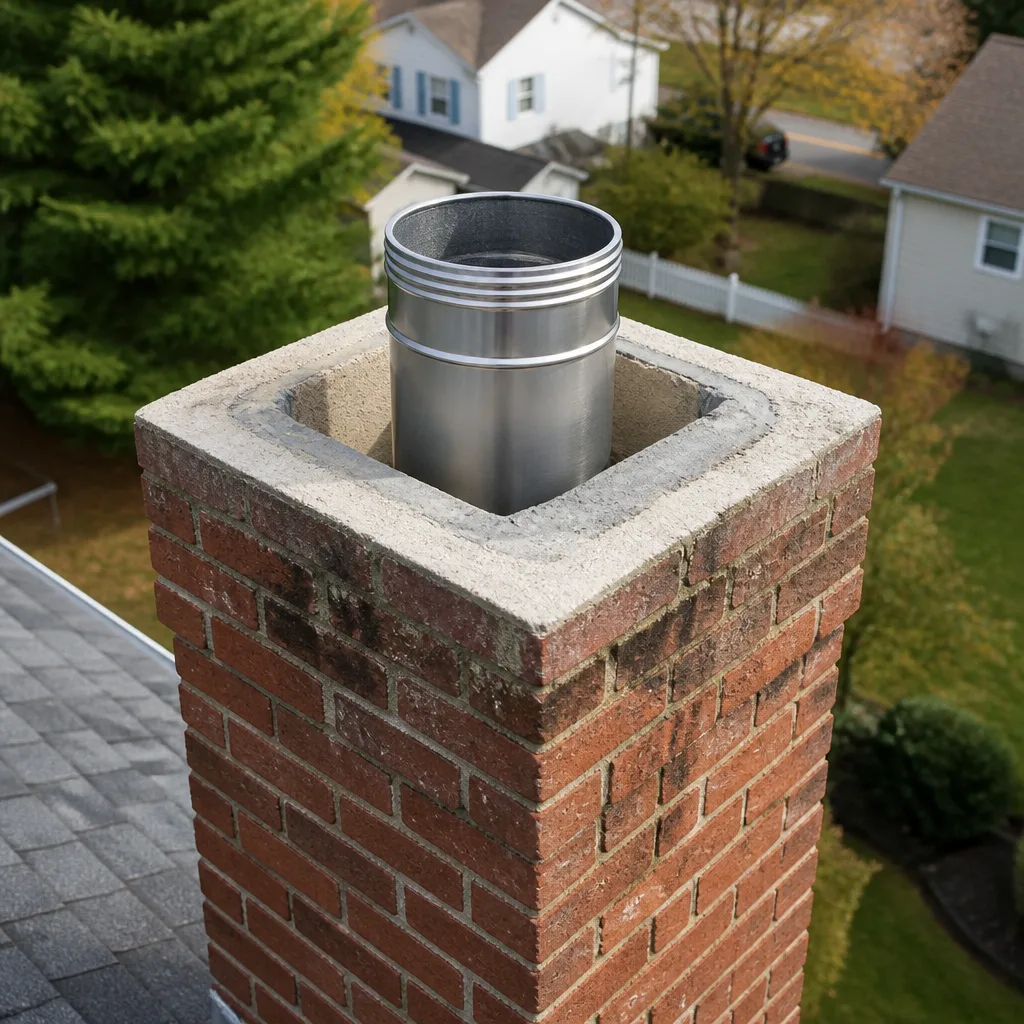 Flue relining
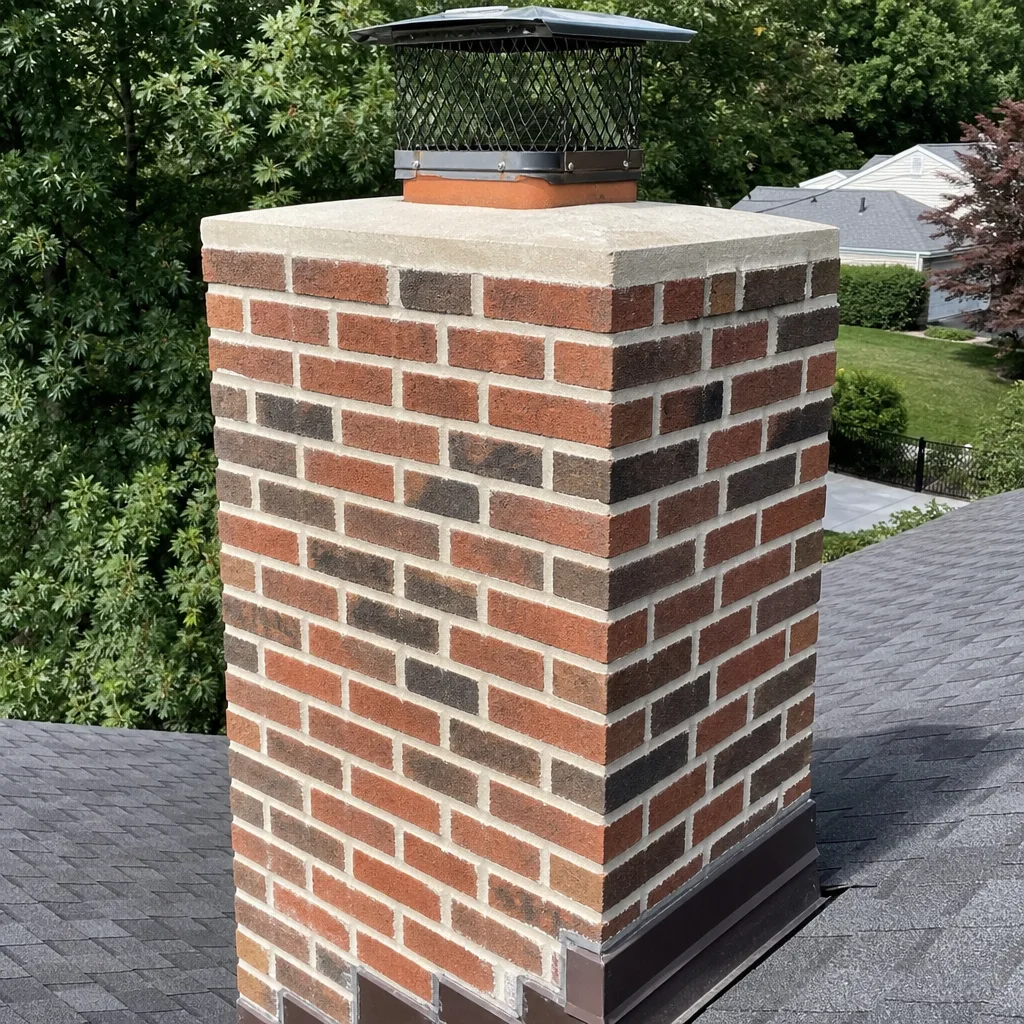 Masonry repair
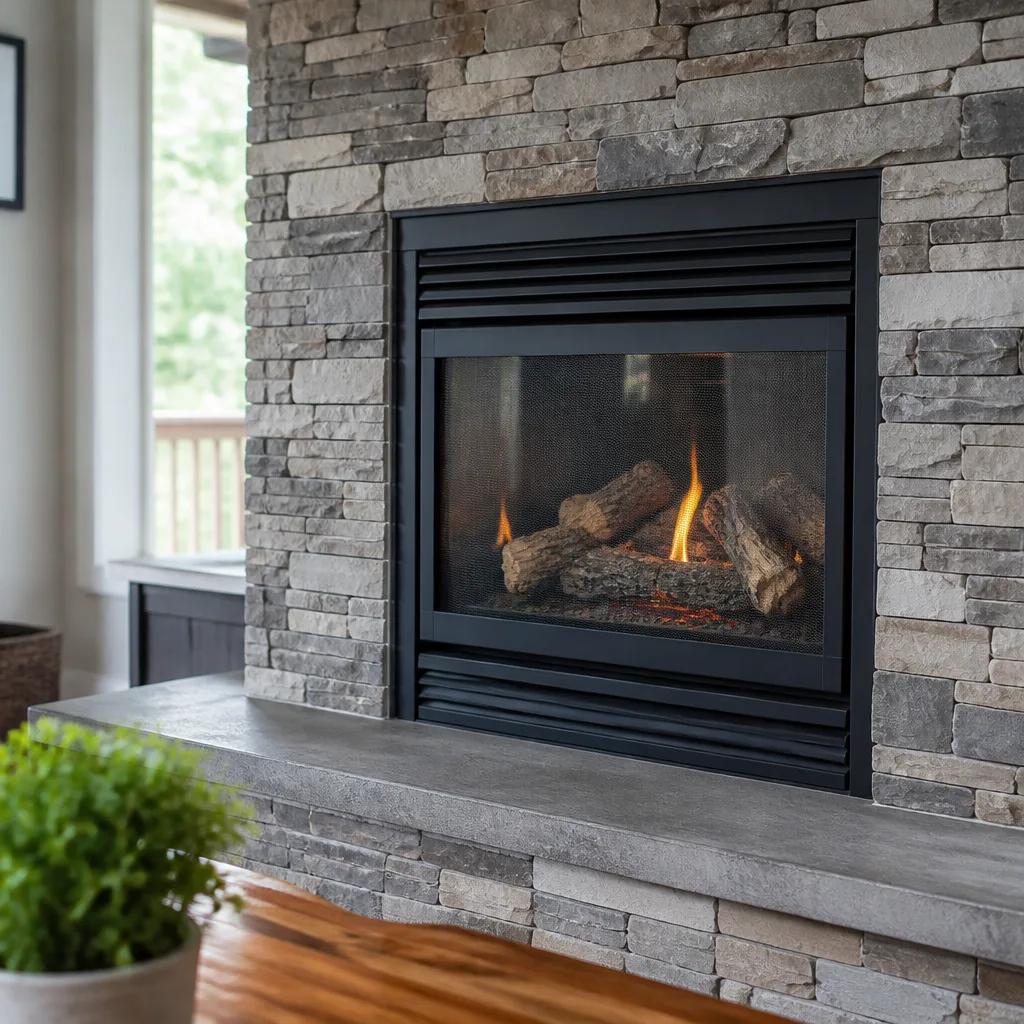 Gas fireplace service
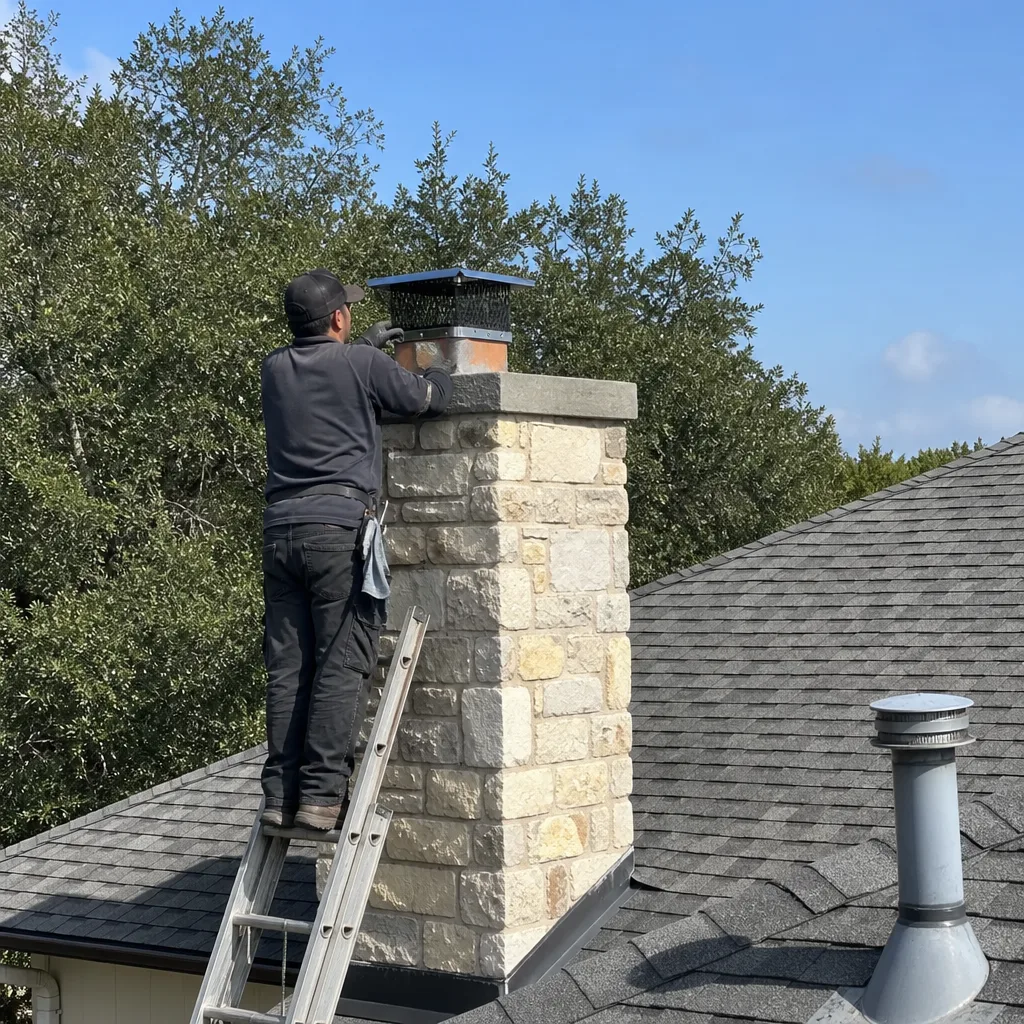
Level 1 sweep and inspection to the NFPA 211 annual standard - flue, crown, cap, and flashing checked and photographed
Chimney sweep logs do not sweep chimneys. They loosen some creosote - which then falls where a brush and vacuum still have to collect it.
Styles & brands we work with
See the difference
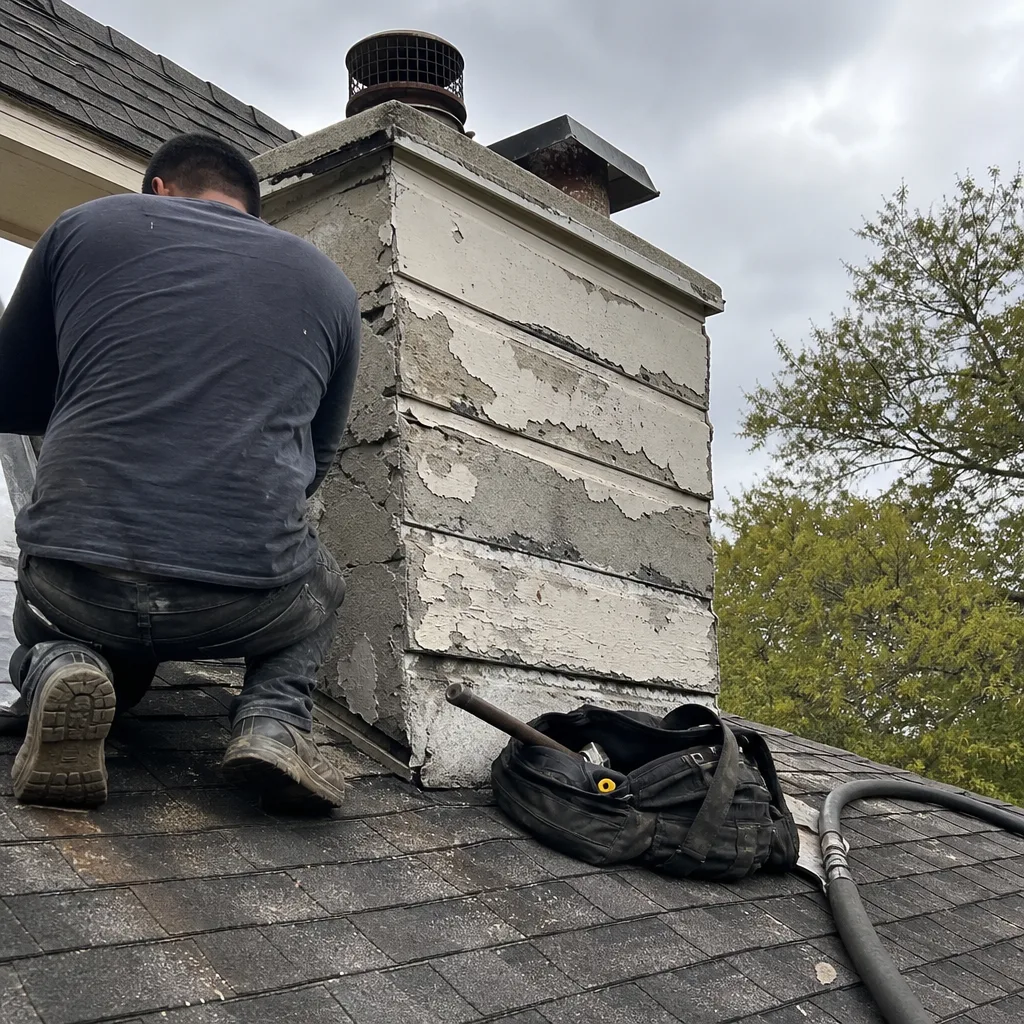 Before
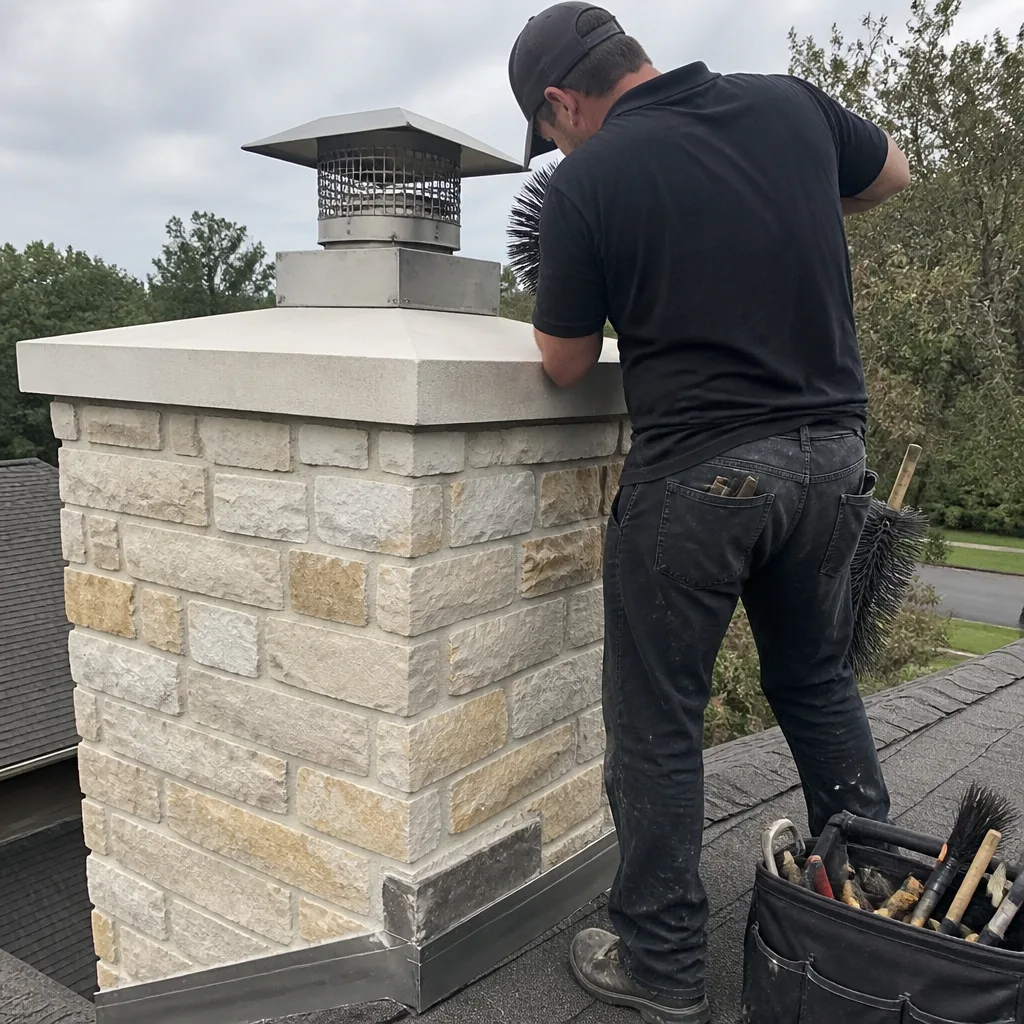 After
After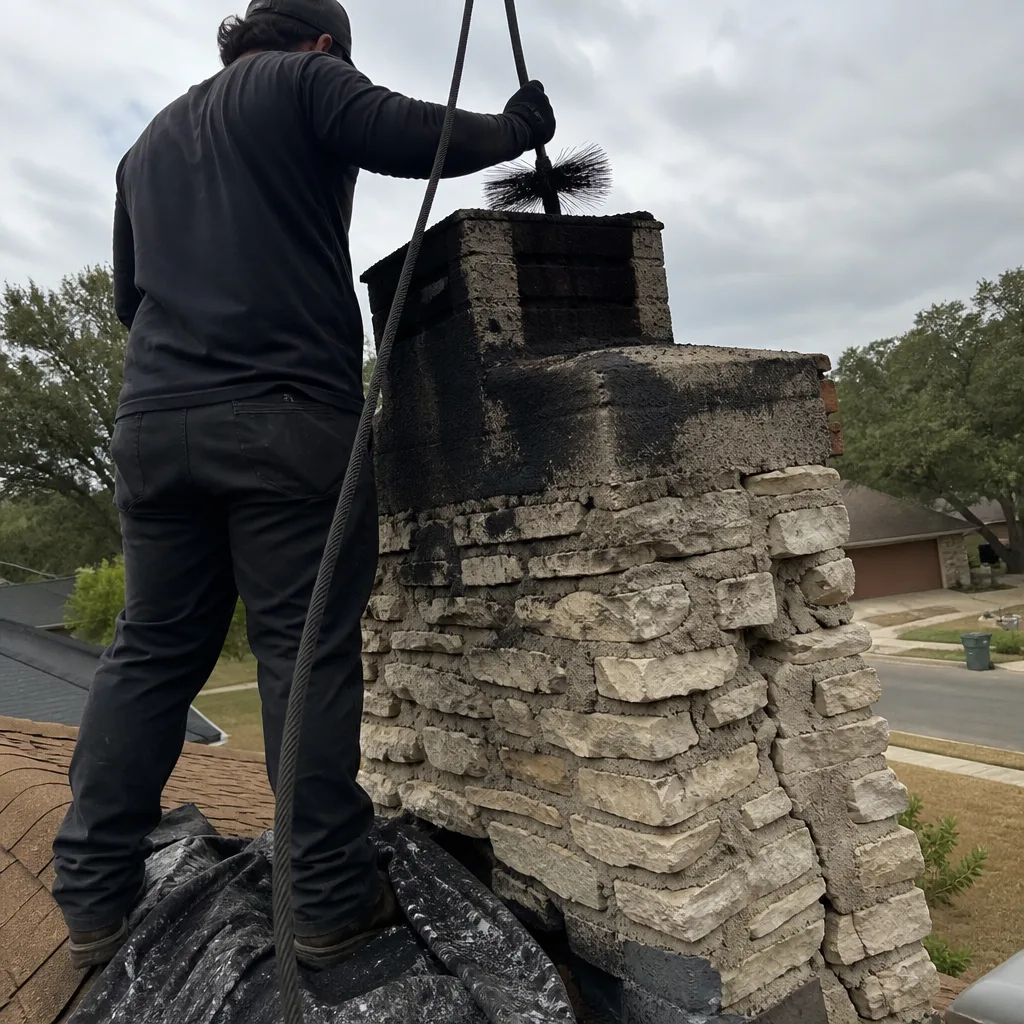 Before
 After
After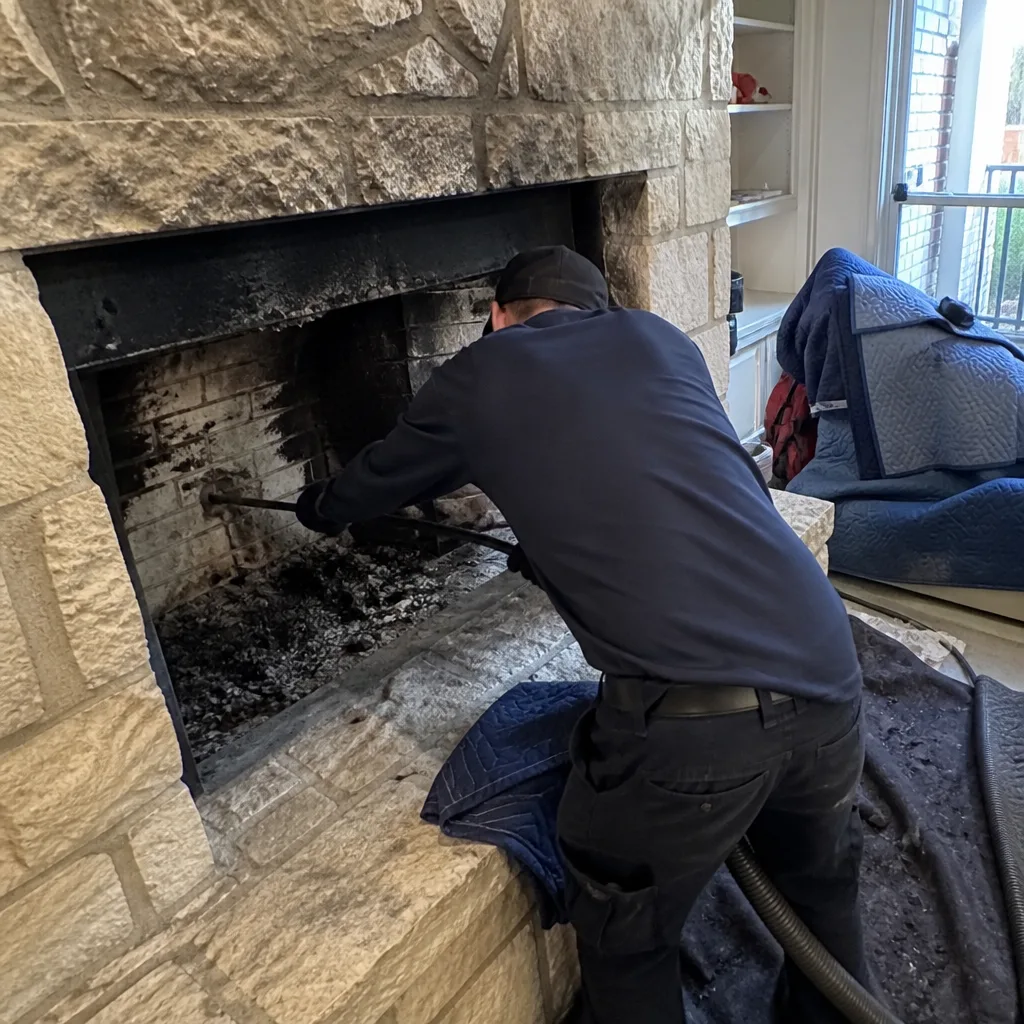 Before
 After
AfterCreosote Removal in Austin, TX
Creosote removal in Austin typically runs between $200 and $550 for a standard open fireplace, depending on how heavy the buildup is and which stage it has reached. If you’re seeing thick, shiny black deposits on your firebox walls or you’ve noticed your fireplace is drafting poorly, that’s creosote, and it’s the leading cause of chimney fires in Central Texas. At Ashby Chimney Austin, we remove creosote with professional-grade tools and straight talk: a written price before any work starts, a real arrival window, and a written guarantee on the work when we leave. Call us at (254) 274-4486 for a free estimate.
Creosote is a byproduct of burning wood: when smoke cools as it rises through the flue, the unburned particles condense on the chimney walls. What starts as a dusty brown film can harden into a dense, tar-like glaze that’s stubborn enough to ignore even aggressive brushing. That’s where our part of Chimney Cleaning & Sweep in Austin comes in, since creosote removal is a core piece of that work. The goal is not just to make the chimney look cleaner. It’s to remove the fuel that could ignite.
When You Need Creosote Removal
Most homeowners in Austin don’t think about their chimney until something feels wrong. Here are the signs that point to creosote buildup rather than ordinary dust or debris:
- You see black or dark brown residue inside the firebox or on the damper. A light dusting is normal; a thick coating that looks like coffee grounds or melted tar isn’t.
- Your fires produce more smoke in the room than up the flue. Creosote narrows the flue passage and disrupts the draft, especially in the humid air we get around Lake Travis and the Hill Country valleys.
- There’s a strong, smoky, or sharp chemical smell coming from the fireplace, even in summer. Creosote absorbs moisture and off-gasses when Austin humidity climbs; you might notice it after a rainy stretch or a long hot spell.
- You see “puffy” or honeycombed deposits on the flue walls. That’s stage-three creosote, and it means a hot fire could ignite it.
- It has been more than a year since your last sweep. Even one winter of regular fires in neighborhoods like Hyde Park, Tarrytown, or Circle C can produce enough creosote to warrant removal.
- You’ve switched from older hardwoods to cedar or pinon. Those woods burn hotter but can throw off more volatiles that condense quickly, especially if you burn them before they’ve fully seasoned.
Creosote develops in three stages, and the stage matters. Stage one is a flaky soot that brushes away without much resistance. Stage two is granular and honeycombed, closer to what you’d find in a well-used fireplace. Stage three is the hardened, shinier coating that can resists conventional sweeping tools. Austin’s climate adds a twist here: the swings between dry heat and humidity mean chimneys get more thermal cycling than they would in a drier climate, which can cause stage-two and stage-three creosote to crack and settle in the flue’s bends and offsets. Those pockets are where heat builds and fires start.
Our Creosote Removal Process
We keep the process simple enough to explain before we begin, and that’s the point. You’ll know what we’re doing, why, and what it costs before the first brush goes up the chimney.
- Inspection and written quote. We inspect the firebox, damper, and flue first. Then we show you what we found and give you a written price for the creosote removal. That number does not change after we start.
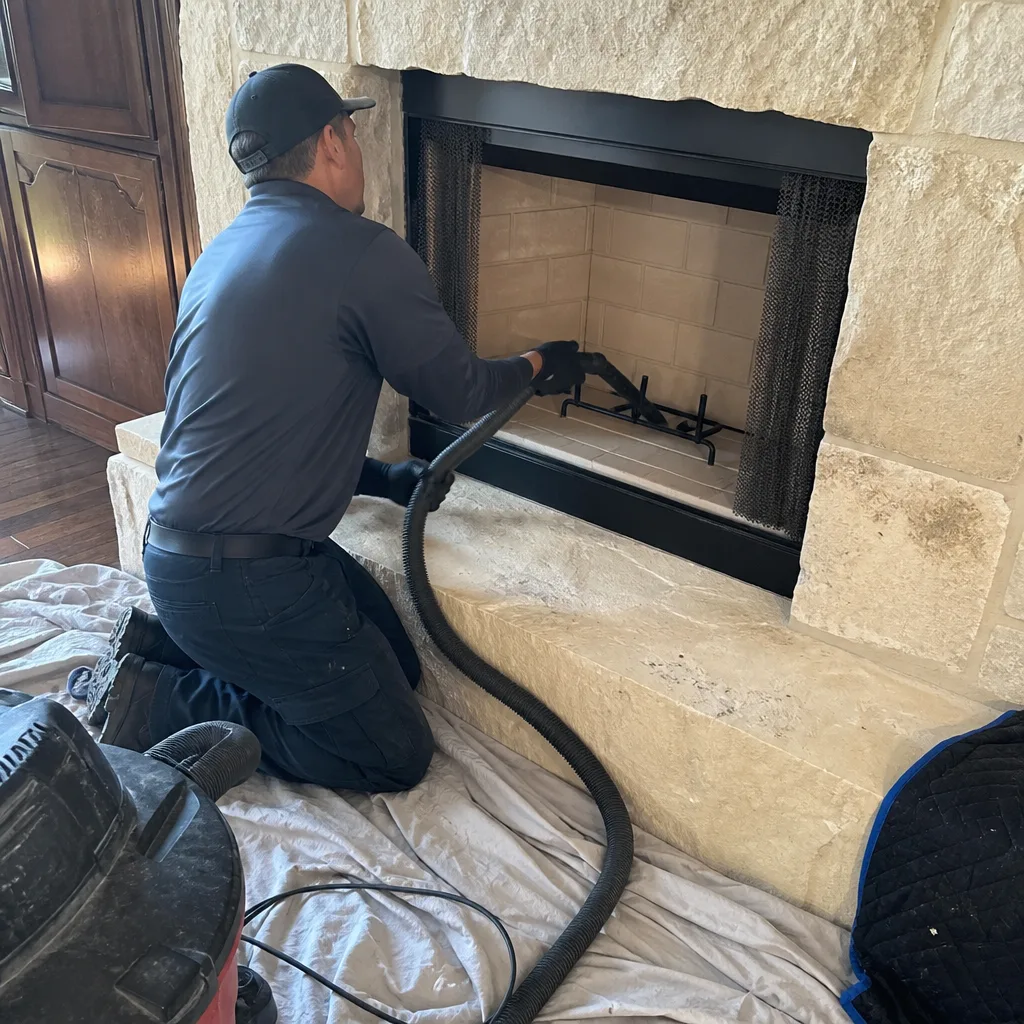
- Site protection. We lay down drop cloths and use a high-powered HEPA vacuum to keep dust and soot out of your living room. Ashby carries ash right in the name, but we don’t expect you to live with it on the sofa.
- Mechanical brushing. A correctly sized chimney brush removes the stage-one and most stage-two creosote. We run the brush through the full length of the flue, not just the easiest six feet.
- Rotary treatment for stubborn deposits. When stage-three creosote is present, we use a professional rotary cleaning system to break up hardened glaze. This is the step that separates a real creosote removal from a quick sweep that just polishes the surface.
- Application of a creosote treatment, where it helps. In some cases we apply a professional-grade creosote modifying treatment, sourced from chimney-trade suppliers like Gelco or Olympia Chimney, to alter the remaining residue so it brushes away more easily next time. We’ll tell you if this is recommended and what it costs before we do it.
- Post-cleaning inspection and written guarantee. We run a final look up the flue, show you what we removed, and leave you with our written guarantee. Under the 365-Day Done Right Promise, if the job isn’t done right, we make it right.
There’s one thing we’ll say plainly: creosote removal is not a DIY weekend project. The flue on most Austin homes is 15 to 30 feet tall, and working from a roof with rods and brushes while dealing with a dusty, potentially combustible material is a job for a trained technician. We’ve seen homeowners try to rent brushes and tackle stage-two creosote, and it usually ends with a call to us anyway, along with a bigger buildup than they started with.
Creosote Removal Pricing in Austin
Here’s the honest range for most Austin homes, based on the kind of fireplace and the creosote stage:
| Service Type | Typical Austin Price Range |
|---|---|
| Standard open fireplace, stage 1 | $200 – $300 |
| Open fireplace, stage 2 (moderate honeycomb) | $300 – $450 |
| Open fireplace, stage 3 (hardened glaze) | $450 – $600+ |
| Pre-fab fireplace or wood stove | $275 – $500 |
| Additional flue or appliance | $150 – $250 per unit |
| Creosote modifying treatment add-on | $75 – $150 |
What moves the price is the creosote stage, the height of the flue, and the kind of system you have. A mid-century bungalow in Crestview with a single-story clay flue will cost less than a two-story home in Lakeway with a steep roof pitch and an offset flue. The honest way to know is to have us inspect and write the quote, and that estimate is free. No pricing games. The number we write down is the number on the invoice.
Every creosote removal includes the full sweep, the cleanup, and the written guarantee. We don’t charge a “guarantee fee” or make you call a second number to get it in writing. It’s included.
Why Austin Homeowners Call Ashby Chimney Austin
If you’ve been through the cycle of no-show technicians and price-switch at the door, you already know what you don’t want. Ashby Chimney Austin is the chimney company that shows its work before it starts. Nathan Corliss runs this location, and the operating standard is the Kingswell Way: say the price, show up in the window, leave it cleaner, put the guarantee in writing, and come back if it fails.
We’ve been sweeping chimneys since 2002. Our technicians are background-checked and uniformed, so when we say someone will arrive between 9 and 11, the person who steps out of the truck is the same person you expected. Phones are answered by a live person, 24 hours a day, all week. Call at 2 a.m. with a question, and a person answers. That’s not a perk. That’s the baseline.
We work with professional-grade materials from established chimney-trade brands: Gelco for creosote treatments, Olympia Chimney for liners and components, and Famco and Copperfield for caps and termination hardware. No, we don’t carry a little of everything in the van and hope it fits. We plan the job and bring what the chimney needs.
What Happens to Your Home During Creosote Removal
You can expect some noise, but not a mess. The process takes an hour to an hour and a half for most open fireplaces. We protect the area around the hearth with heavy cloth runners and run a HEPA vacuum through both the removal and the cleanup. When we leave, the firebox is cleaner than when we arrived, the damper works, and any remaining creosote has been treated or removed to the point where it no longer poses a fire risk. You’ll also get a quick notes sheet on what we found, including the flue’s condition, so you can make decisions about any future repair or liner work with real information, not a guess.
Creosote and Austin’s Wood-Burning Culture
Austin burns a lot of wood for a warm-weather city. Winter nights dip into the 30s often enough that fireplaces get regular use from Thanksgiving through Valentine’s Day, and plenty of homes in Allandale, Rosedale, and Hyde Park still have their original masonry fireplaces from the 1940s and 1950s. Those older chimneys often have unlined or clay-lined flues, and those surfaces are particularly good at collecting creosote. Even newer homes in Steiner Ranch or Mueller with pre-fabricated fireplaces are not immune; pre-fabs actually tend to develop creosote faster because their metal flues cool quickly and let smoke condense sooner.
What we see across Austin: homeowners who burn cedar and pecan, both of which are common local woods, and who don’t realize that creosote buildup from dense hardwood smoke is just as real as it is from pine. The rule is simple: if you’re burning more than a cord of wood a season, or if your fireplace sees more than twice-a-week use, an annual creosote check is worth the money.
FAQs – Creosote Removal
How much does creosote removal cost in Austin?
Creosote removal in Austin typically costs between $200 and $550, with most standard open fireplaces landing between $250 and $450. The price depends on the creosote stage, the height of the flue, and the type of fireplace you have. Stage three creosote, which requires rotary treatment, is at the higher end of that range. Call (254) 274-4486 and we’ll give you a written estimate, which is always free.
How do I know if I have dangerous creosote buildup?
The biggest warning signs are a thick black coating in the firebox, a strong smoky or chemical smell that gets worse in humid weather, and smoke spilling into the room when you burn. Any of the three means a professional should inspect the chimney before you light another fire. Creosote is the fuel for chimney fires, so it’s not a “wait and see” situation.
Is creosote removal the same as a chimney sweep?
Creosote removal is a deeper, more targeted version of the standard sweep. A chimney sweep removes the loose soot and debris, while creosote removal focuses on the hardened or tar-like deposits that can ignite. Many Austins chimneys need both, which is why our sweep service includes creosote removal as a standard step.
Can creosote be removed without scraping the chimney?
Chemical treatments can alter creosote and make future removal easier, but they don’t by themselves remove heavy or stage-three buildup. Rotary mechanical removal is the only reliable method we trust for hardened glaze, though we sometimes combine it with a creosote modifier from brands like Gelco to make the next cleaning easier.
How often should I have creosote removed in Austin?
For most Austin homes, once a year is the right cadence, and twice a year if you burn heavily or burn cedar or pine frequently. The National Fire Protection Association recommends a chimney inspection at least once a year, and a sweep whenever there is 1/8 inch or more of sooty buildup. In practice, that means an annual visit for most fireplaces in the Austin area.
Serving Austin and the Surrounding Communities
We service homes across Travis and Williamson counties, from the older neighborhoods close to downtown to the newer builds along the 290 corridor and up into Hutto, Leander, and Pflugerville. If you’re in Austin and need creosote removal on a chimney that has been neglected for a few winters, we’ll inspect it and give you the straight story on what it needs and what it costs.
If you’re noticing any of the signs above, or if you just can’t remember the last time someone actually looked at your flue, call Ashby Chimney Austin at (254) 274-4486. We’ll answer live, set a real arrival window, and give you a written price before any work begins. No pressure, no markup at the door, and a written guarantee on the creosote removal when we’re done.
Key Takeaways
- Creosote removal in Austin typically ranges from $200 to $550 depending on buildup stage and chimney height.
- Signs you need it: black residue, smoky smells in humid weather, poor draft, or more than a year since the last sweep.
- Ashby Chimney Austin uses rotary tools for stage-three creosote and writes the price before starting.
- Every job includes cleanup, a written guarantee, and the 365-Day Done Right Promise.
- Call (254) 274-4486 any time for a free estimate; a live person answers.
Written by Nathan Corliss, Owner at Ashby Chimney Austin, serving Austin.